
Black Maca Benefits
Black Maca Benefits: What the Research Shows
If you’re researching black maca benefits, you may be wondering whether black maca is actually different from other colors of maca and, more importantly, what it may be good for.
Black maca is often associated with energy, stamina, physical performance, focus and men’s reproductive health. Research gives us some interesting reasons for those associations — but the evidence is not equally strong in every area.
There is some human research specifically involving black maca. Much of the color-specific research, however, has been conducted in animals or in the laboratory.
At The Maca Team, we’ve specialized in Peruvian maca since 2006. We think the most useful way to understand black maca is to look at what has actually been studied, distinguish human findings from animal and laboratory research, and avoid turning promising results into promises.
That’s what we’ll do here.
On This Page
- Black Maca Benefits at a Glance
- What Is Black Maca?
- Is Black Maca Different From Red and Yellow Maca?
- What Does the Research Say About Black Maca?
- Black Maca Benefits for Men and Women
- How to Choose Black Maca
- How Long Does Black Maca Take to Work?
- Does Black Maca Have Side Effects?
- Black Maca FAQs
- References
Black Maca Benefits at a Glance
Black maca has received research attention in several areas:
- Energy and quality of life — human research: A randomized placebo-controlled study found differences in perceived energy and quality-of-life measures among some participants taking black maca.
- Physical performance and stamina — limited human research: Small studies in athletes have reported changes in selected endurance, strength and physical-performance measures.
- Male reproductive parameters — primarily animal research: Black maca has produced distinctive results involving sperm count and motility in several animal studies.
- Memory and learning — animal research: Black maca has performed favorably in several mouse studies involving learning and memory.
- Antioxidant activity — laboratory research: Components of black maca showed greater antioxidant activity than red and yellow maca in one laboratory comparison.
- Metabolism — animal research: Black maca extract has been studied in an animal model involving glucose and lipid metabolism.
- Bone structure — animal research: Black and red maca have both produced interesting results in ovariectomized rats.
So there is genuine research behind the interest in black maca. The important question is not simply, “Does black maca have benefits?” but rather, “What kind of evidence do we have for each one?”
Let’s take a closer look.
What Is Black Maca?
Black maca is a naturally occurring color variety, or phenotype, of maca.
Maca itself is a cruciferous vegetable native to the high Andes of Peru, where it has been cultivated as a food for centuries. The edible portion grows underground and resembles a small turnip or radish.
Maca roots naturally occur in a range of colors. Yellow, red and black are the three colors most commonly separated for commercial use and the three that have received the most scientific attention.
Although they belong to the same plant species and have much in common nutritionally, researchers have found differences in the chemical composition and biological activity of different maca colors.
That is one reason we don’t consider all maca to be exactly the same.
Is Black Maca Really Different From Red and Yellow Maca?
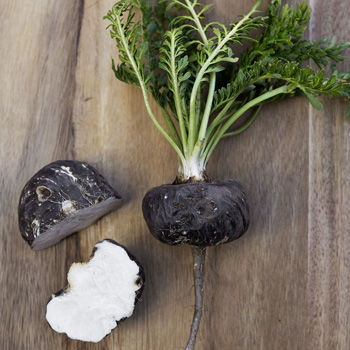
Black maca is identified by the naturally dark outer color of the root.
Apparently, yes — although there is still a great deal to learn.
Researchers comparing maca colors have found differences in phytochemical composition as well as differences in biological responses in experimental studies.
For example, black maca has performed differently from red and yellow maca in research involving sperm production, memory and learning. Red maca has developed its own distinctive research profile in other areas.
A 2018 laboratory analysis also found differences in the essential oils, lipids and polysaccharides present in the three major maca colors. In that particular study, components isolated from black maca demonstrated the highest antioxidant activity of the three colors tested. [1]
These differences do not mean black, red and yellow maca should be thought of as three completely different foods or medicines. Maca is still maca, and the science comparing individual colors is relatively young.
But the research does give us good reason to take maca color seriously.
For a broader comparison, see our Black vs. Red vs. Yellow Maca guide.
What Does the Research Say About Black Maca?
Here are the main areas scientists have investigated.
1. Energy and Quality of Life
This is one of the more interesting areas because there is human research specifically involving black maca.
In a randomized, double-blind, placebo-controlled study published in 2016, researchers studied 175 adults living at either low or high altitude in Peru. Participants received 3 grams daily of a spray-dried black maca extract, red maca extract or placebo for 12 weeks. [2]
Among participants living at low altitude, both black and red maca were associated with greater self-reported energy compared with placebo at several points during the study.
Health-related quality-of-life scores also improved in the black maca group compared with placebo at several measurement points.
This does not mean everyone taking black maca should expect an energy boost. It does, however, give us human research behind one of the most common reasons people are interested in black maca.
It is also worth pointing out that maca does not contain caffeine and is not a stimulant in the way coffee is.
2. Physical Performance and Stamina
Black maca has long been particularly popular with athletes, active people and customers who include maca in their exercise routines.
There is now some human research in this area.
A 2023 study followed 44 male elite athletes from shooting, racket sports and fin swimming while they took black maca for eight weeks. Researchers reported changes in several physical-fitness measures, particularly among the fin swimmers. [10]
The study is interesting, but it did not include a placebo control, so the findings should be viewed as preliminary.
A separate 2023 placebo-controlled crossover study looked at eight female elite handball players. Researchers reported improvements in a 20-meter shuttle run and several measures of muscle function during the black maca portion of the study compared with placebo. [11]
That study provides a more controlled comparison, but eight participants is a very small sample.
Taken together, these studies make physical performance one of the more interesting emerging areas of human black maca research. They do not yet establish that black maca will improve athletic performance generally.
If this is your main reason for considering maca, see our guide to maca for active lifestyles.
3. Male Reproductive Research
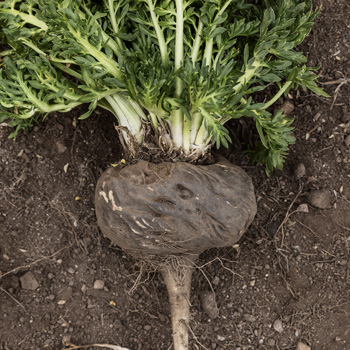
Black maca is one of the naturally occurring maca root colors cultivated in the Peruvian Andes.
This is probably the area in which black maca has distinguished itself most clearly from other colors — with one important qualification:
Most of the color-specific research has been conducted in animals.
In a 2006 study, researchers gave black maca extract to male rats and measured sperm at different stages of the reproductive tract. They reported changes in sperm counts during the study, including increases in epididymal and vas deferens sperm counts at certain measurement points. [3]
Another study comparing black, red and yellow maca found that black maca was the only color to increase daily sperm production after both short- and longer-term treatment in rats. The researchers also reported increased epididymal sperm motility after longer treatment with black maca. [4]
A later study in mice again found higher sperm concentrations after administration of a black maca fraction compared with yellow maca. [5]
These studies help explain why black maca is so often associated with men’s reproductive health.
They do not, however, establish that eating black maca will produce the same results in men. Human research specifically isolating black maca for sperm parameters remains limited.
That distinction is important.
4. Does Black Maca Increase Testosterone?
This question comes up often enough that it deserves its own section.
There is no good reason to think of black maca as a source of testosterone or as a food that simply raises testosterone levels.
Maca itself does not contain testosterone.
Interestingly, in the 2006 black maca rat study discussed above, researchers measured testicular testosterone and found that it was not affected by black maca treatment. [3]
Research on maca more broadly has also suggested that its effects do not necessarily depend on changing circulating reproductive hormone levels.
In other words, whatever maca may be doing in the body appears to be more complicated than simply “boosting testosterone.”
You can learn more in our article on maca and healthy testosterone.
5. Memory and Learning
Black maca has also been studied for learning and memory.
In one experiment comparing yellow, red and black maca in ovariectomized mice, black maca produced the strongest response in a test of latent learning. [6]
Another study published in 2011 investigated black maca in mice with experimentally induced memory impairment. Researchers reported improvements in performance on memory tasks and observed a dose-related response. [7]
These are intriguing findings and help explain black maca’s reputation for focus and mental sharpness.
But once again, these were animal studies.
We would not translate them into a claim that black maca has been proven to improve human memory or concentration. They are better understood as an interesting area for future human research.
6. Antioxidant Activity
Researchers have also compared antioxidant activity among maca colors.
A 2018 laboratory study analyzed essential oils, lipids and polysaccharides extracted from yellow, red and black maca. Components isolated from all three showed antioxidant activity, while the black maca samples had the strongest activity in the laboratory assay used in that particular study. [1]
Laboratory antioxidant activity does not automatically translate into a specific health benefit in a person.
Still, this research provides further evidence that different maca colors are chemically distinct and gives researchers another possible avenue for understanding why their biological effects may differ.
7. Metabolic Research
Black maca has also been investigated in relation to metabolism.
One 2018 study examined black maca extract in golden hamsters fed a high-fat, high-fructose diet. Researchers observed changes involving glucose and lipid metabolism and several related metabolic pathways. [8]
This is interesting research, but it is important not to overstate it.
It was an animal model involving a specially prepared black maca extract. It does not demonstrate that black maca prevents or treats metabolic disorders in people.
For us, the main significance of the study is that it adds another piece to the scientific investigation into how compounds in black maca interact with biological systems.
8. Bone Research
Black maca and red maca have also been compared in animal research involving bone structure.
In a 2010 study using ovariectomized rats, researchers compared black, red and yellow maca. Black and red maca were associated with differences in several measurements of femoral and vertebral bone structure compared with untreated animals. [9]
An interesting detail from this study was that neither black nor red maca increased uterine weight, while estradiol did.
Again, this is animal research and should not be interpreted as evidence that black maca prevents osteoporosis or other bone conditions in people.
It does, however, represent another area in which researchers have observed differences among maca colors.
Black Maca Benefits for Men and Women

Black maca is not just for men. Both men and women use this naturally occurring maca color.
Black maca is sometimes described as “men’s maca.” That nickname comes primarily from the unusually large amount of color-specific research involving male reproductive parameters.
But black maca is certainly not just for men.
Black Maca for Men
Men often become interested in black maca because of the research involving sperm production and motility, as well as black maca’s popularity among active people.
The reproductive findings are worth knowing about, but most of that evidence still comes from animal studies. We would not describe black maca as a proven fertility treatment or assume that the animal findings will translate directly to men.
Black Maca for Women
Women also use black maca, particularly when their interests include an active lifestyle, stamina, energy or simply the research profile of black maca.
There is nothing inherently male about black maca, and maca does not contain male hormones.
In fact, some of the research discussed above — including the learning and bone studies — used female animal models, and one of the newer human athletic-performance studies involved female athletes.
Ultimately, choosing a maca color is less about whether you are male or female and more about what has led you to maca in the first place.
If you’re still deciding, our Which Maca Is Best for You? guide is a good next step.
How to Choose Black Maca
Once you’ve decided that black maca is the color you want to try, there are still a couple of choices to make.
You can choose between raw and gelatinized maca and between powders, capsules and extracts.
Raw maca powder is the closest to the traditionally dried whole root. Gelatinized maca has been cooked and has much of its starch removed, which some people find easier to digest.
Powder is versatile and generally the most economical option. Capsules are convenient. Extracts provide another format for people who prefer them.
The form you choose does not turn black maca into a completely different food. The best choice generally comes down to digestion, convenience and how you plan to use it.
You can learn more in our guides to raw vs. gelatinized maca and maca forms.
Or, if you already know you want black maca, compare all of our black maca products, including powders, capsules and extracts.
How Long Does Black Maca Take to Work?
There isn’t a scientifically established timetable that applies to everyone.
Maca is not a fast-acting stimulant or drug, and we generally encourage people to think of it as a food that is added consistently to the diet.
Some people tell us they notice a difference fairly quickly. Others use maca for several weeks before deciding how they feel about it, while some people notice very little.
The human black maca study discussed earlier lasted 12 weeks, with some differences between treatment and placebo groups appearing during the study period. [2]
That does not mean everyone needs to take black maca for 12 weeks. It simply illustrates why judging maca after a single serving may not tell you very much.
Does Black Maca Have Side Effects?
Most people tolerate maca well when consumed as a food, but no food is right for everyone.
If you’re new to maca, starting with a modest amount is usually the simplest approach. People with sensitive digestion may also prefer gelatinized maca.
If you are pregnant, breastfeeding, have a medical condition, take medication or have specific concerns about whether maca is appropriate for you, speak with a qualified healthcare professional.
For a more detailed discussion, visit our Maca Root Side Effects guide.
Black Maca FAQs
What are the most commonly discussed benefits of black maca?
Black maca is most often associated with energy and stamina, physical performance, male reproductive health, focus and memory. The strength of the evidence differs substantially by area. There is some human research involving energy and athletic performance, while much of the research involving sperm, memory, metabolism and bone structure comes from animal studies.
Is black maca better than red maca?
Not necessarily. Black and red maca have different research profiles, and we do not think there is one maca color that is best for everyone. The better choice depends on why you are interested in maca.
Is black maca a stimulant?
No. Black maca naturally contains no caffeine and does not function like coffee or conventional stimulant products.
Do black maca powder, capsules and extracts have different benefits?
They all begin with black maca, but processing and concentration can differ. Powder offers the whole powdered root, capsules provide a convenient way to take maca powder, and extracts are processed into a more concentrated format. When looking at research, it is also important to notice which form of maca was actually used in a particular study.
References
- Sun Y, Dai C, Shi S, et al. Composition analysis and antioxidant activity of essential oils, lipids and polysaccharides in different phenotypes of Lepidium meyenii. Journal of Chromatography B. 2018. PMID: 30241071. View study
- Gonzales GF, et al. Acceptability, Safety, and Efficacy of Oral Administration of Extracts of Black or Red Maca (Lepidium meyenii) in Adult Human Subjects: A Randomized, Double-Blind, Placebo-Controlled Study. Pharmaceuticals. 2016. PMID: 27548190. View study
- Gonzales GF, Nieto J, Rubio J, Gasco M. Effect of Black maca (Lepidium meyenii) on one spermatogenic cycle in rats. Andrologia. 2006. PMID: 16961569. View study
- Gonzales C, Rubio J, Gasco M, et al. Effect of short-term and long-term treatments with three ecotypes of Lepidium meyenii (Maca) on spermatogenesis in rats. Journal of Ethnopharmacology. 2006. PMID: 16174556. View study
- Inoue N, Farfan C, Gonzales GF. Effect of butanolic fraction of yellow and black maca (Lepidium meyenii) on the sperm count of adult mice. Andrologia. 2016. PMID: 27681648. View study
- Rubio J, Caldas M, Dávila S, Gasco M, Gonzales GF. Effect of three different cultivars of Lepidium meyenii (Maca) on learning and depression in ovariectomized mice. BMC Complementary and Alternative Medicine. 2006. PMID: 16796734. View study
- Rubio J, Yucra S, Gasco M, Gonzales GF. Dose-response effect of black maca (Lepidium meyenii) in mice with memory impairment induced by ethanol. Toxicology Mechanisms and Methods. 2011. PMID: 21780878. View study
- Wan W, Li H, Xiang J, et al. Aqueous Extract of Black Maca Prevents Metabolism Disorder via Regulating the Glycolysis/Gluconeogenesis-TCA Cycle and PPARα Signaling Activation in Golden Hamsters Fed a High-Fat, High-Fructose Diet. Frontiers in Pharmacology. 2018. PMID: 29681858. View study
- Gonzales C, Cárdenas-Valencia I, Leiva-Revilla J, et al. Effects of different varieties of Maca (Lepidium meyenii) on bone structure in ovariectomized rats. Forschende Komplementärmedizin. 2010. PMID: 20616517. View study
- Lee E, Park M, Kim B, Kang S. Effect of Black Maca Supplementation on Inflammatory Markers and Physical Fitness in Male Elite Athletes. Nutrients. 2023. PMID: 37049458. View study
- Kang S, Ahn BO, Park MH, Lim ST, Lee E. Effects of Black Maca supplement on isokinetics muscular performance of elite women’s handball players: placebo-controlled, crossover study. Food & Nutrition Research. 2023. PMID: 38187794. View study
Final Thoughts
Black maca is one of the more scientifically interesting colors of maca.
There is human research involving energy, quality of life and physical performance, while animal and laboratory studies have explored male reproductive parameters, memory and learning, antioxidant activity, metabolism and bone structure.
That doesn’t mean every proposed black maca benefit has been proven. It does mean there are real, measurable differences among maca colors that researchers continue to investigate.
After working exclusively with Peruvian maca since 2006, we’ve found that people choose black maca for many different reasons. For some, its research profile makes it the obvious place to start. Others may be better suited to red, yellow or traditional tri-color maca.
If black maca sounds like the right choice for you, visit our Black Maca page to compare our organic Peruvian black maca powders, capsules and extracts.
We hope this article has helped you better understand what makes black maca different, why it has attracted so much research interest and where the science currently stands. If you have questions about which type of black maca may fit your routine best, please let us know.
Enjoy the day!